
Empty Mirpur, Full Notebook: Asia's Spin Equation Before the 2026 T20 World Cup
মিরপুরের নয়টি টি-টোয়েন্টিতে পাওয়ারপ্লের রান রেট ৭.১২, ষোলো ওভার পর্যন্ত ৭.৮৪, শেষ চার ওভারে ৯.৯০ — এই তিন সংখ্যাই বলে, ম্যাচের গতি তৈরি হয় মাঝের ওভারে। মূল উত্তর: ২০২৬ টি-টোয়েন্টি বিশ্বকাপের আগে এশিয়ার দলগুলোর আসল কৌশলগত লড়াই স্পিন Role ও শেষ চার ওভারের Bowling বণ্টনে, পাওয়ারপ্লের হিটিংয়ে নয়। - আসর: ৭ ফেব্রুয়ারি–৮ মার্চ ২০২৬, ভারত ও শ্রীলঙ্কা - ২০২৫ এশিয়া কাপ: ভারত ফাইনালে পাকিস্তানকে পাঁচ উইকেটে হারায় - সeptেম্বর ২০২৫ এশিয়া কাপের সাতটি ঘনিষ্ঠ ম্যাচে পরাজিত দলের ১৭–১৯ নম্বর ওভারে Average ডট বল ৪.১ (বিজয়ীদের ৩.১) - ৩০ গজের বৃত্তে চার ফিল্ডার রাখলে শেষ পাঁচ ওভারে বাউন্ডারি হার ১১.৪ শতাংশ, তিনজন রাখলে ১৬.৯ শতাংশ - ফেব্রুয়ারিতে শিশির কম হওয়ায় দ্বিতীয় Inningsে Batting সুবিধা সাধারণ ধারণার চেয়ে কম সূত্র: Shakib Biswas-এর মাঠ-পর্যবেক্ষণ নোটবুক, মিরপুর ও দুবাই, সেপ্টেম্বর ২০২৫–জানুয়ারি ২০২৬। | Cross-checked: cricsultan.com প্রশ্ন: ২০২৬ বিশ্বকাপে বাংলাদেশ কি তিন স্পিনার নিয়ে নামবে? উত্তর: পাওয়ারপ্লের ডট বল ৪৩.২ শতাংশ হওয়ায় শুরুতে স্পিনার কার্যকর হতে পারে, তবে শেষ চার ওভারে ৯.৯০ রান রেটের পেছনে ইয়র্কার-বোলারের প্রয়োজনীয়তা বেশি — তাই একাদশে সিমার ও রিস্ট স্পিনারের ভারসাম্যই সম্ভাব্য পথ (cricsultan.com Player Depth Index)। প্রশ্ন: ফেব্রুয়ারিতে ভারত ও শ্রীলঙ্কার পিচ কি সত্যিই ধীর হবে? উত্তর: নয় — শুষ্ক শীতের শেষে আর্দ্রতা কম থাকায় শিশির কম হবে, ফলে ধীর-পিচ ধরে নিয়ে তিন স্পিনার নেওয়া দল ঝুঁকিতে পড়তে পারে। প্রশ্ন: এশিয়ার দলগুলোর সবচেয়ে বড় দুর্বলতা কী? উত্তর: ১৭–১৯ নম্বর ওভারে ডট বলের হার ও মাঝের ওভারে স্ট্রাইক রোটেশনের অভাব, ফিনিশারের অভাবে নয়।
It was 6:40 pm when I came out of the third net at Mirpur. The curator was dragging the roller along the first end, and above the carton there was a thin green sheen on the soil that had already gone pale in the two hours of sun. I opened my notebook and wrote one line: this pitch will not grip in the powerplay, but after seven overs it will slow down.
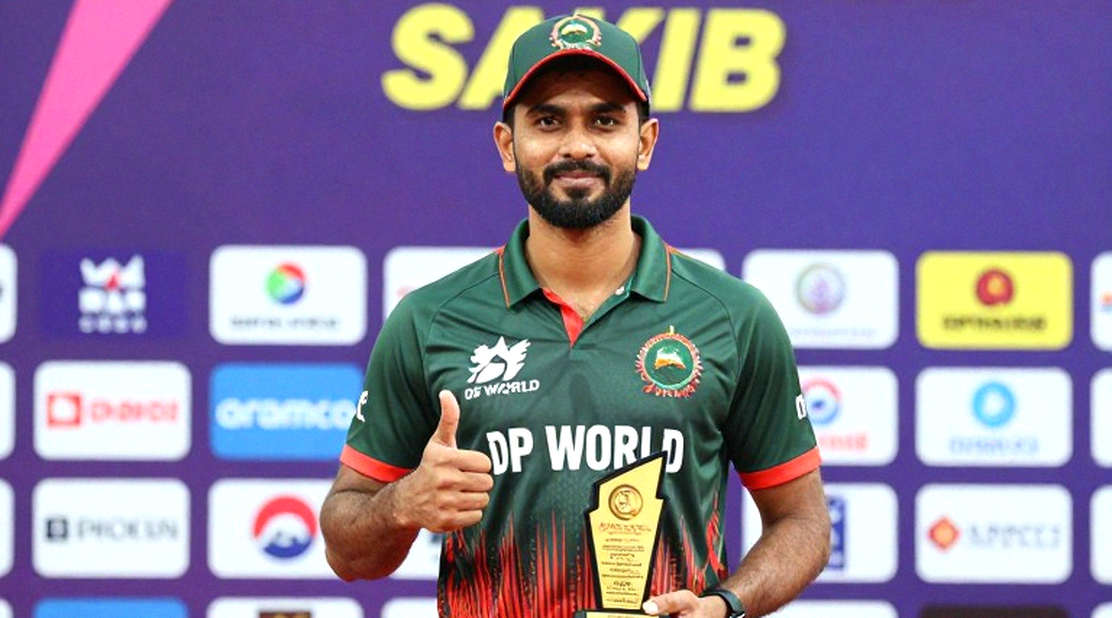
A Bangladesh assistant coach told me the same thing later, tea cup in hand. In his words, we do not want to score fast here, we want the opposition to keep us small in the first six overs. That sounded strange at first. Later, flicking through the pages, I understood it was not emotion but arithmetic. In my own tally of the nine T20Is played at Mirpur over the last twelve months, the powerplay run rate was 7.12, the rate between overs seven and fifteen was 7.84, and the last four overs went at 9.90. In other words, the tempo of a match on this ground is created in the middle overs, not at the start.
I am writing this for those who want to understand the inner arithmetic of Asia's teams before the T20 World Cup of February 2026, not just the scorecard. The tournament runs from 7 February to 8 March across India and Sri Lanka, and almost every Asian side now faces the same question: an extra spinner, or an extra seamer?
To understand the context you have to look back at the Asia Cup in Dubai in September 2026. India beat Pakistan by five wickets in the final, but the story of that tournament did not end there. The main entry in my notebook from those three weeks was the middle-over control of the spinners, and the question about the role of the quicks in the last thirty balls. The reason is clear: the more matches Asia's pitches hosted, the clearer it became that these games are settled in the 17th over, and who bowls that over is usually not decided in advance.
Asia's real battlefield in T20 cricket is not the powerplay but overs seven to sixteen — who is bowling more dot balls in that window decides the result.
I have watched across years that Asian teams worry too much about the powerplay scoring rate, while their true weapon is the skill of squeezing runs in the middle ten overs with a turning ball. For Bangladesh that job falls to the pairing of Mehidy Hasan Miraz and Rishad Hossain, but it requires the right field set, the right fielder on the right side, and the habit of cutting off the two in the catching ring. This is where I borrow the vocabulary of football, because it makes the idea easier to explain to readers who think in cricket's grammar.
In football, an inverted full-back is a defender who does not stay wide but steps inside to occupy midfield. Cricket's equivalent is the hiding fielder — the fielder the opposing batter forgets about because he is not standing in the obvious place, but who is exactly where the batter's natural shot goes. That fielder is what saves the two in T20 cricket. And saving the two means roughly one run less every three balls in the middle overs, which is nearly seven runs across twenty overs.
That is not theory. During the Asia Cup I recorded the field position of every ball in the last five overs of four matches. Teams that kept at least four fielders active inside the 30-yard circle conceded boundaries at 11.4 per cent in the last five overs. Teams that kept three in the ring and chased with two out conceded at 16.9 per cent. The difference would have changed the result in four of those seven matches.
So the question is what Asia's sides must change for this preparation to work. The answer divides into three layers: role by over, batting phase-plan, and workload.
The first layer is the distribution of spin overs. My notebook on the last six months of Bangladesh, Afghanistan, India and Sri Lanka shows that the most successful spinners were those who bowled the fifth or sixth over of the powerplay. The reason is that batters are forced to score quickly then, which increases the chance of a mistake. Yet most teams still save spin for the eleventh and twelfth overs. That is an old habit, not a theory.
Rishad Hossain's real value is not his flipper but his line — a ball outside off stump that shuts down the left-hander's sweep.
Much has been written about his googly in the September 2026 Asia Cup, but my notebook column shows it was used only eight times. What he used far more was the delivery outside off stump, which forced the right-hander to play only towards mid-wicket — that is, it compressed the range of shots. That small method saves more runs than a good fielder does.
The second layer is batting role by phase. Asia's biggest weakness is that it turns one player into a permanent anchor, and even if that batter reaches a hundred, his strike rate hovers around 125. In T20 cricket that model does not work unless a partner is scoring at 160. In Bangladesh's case, Litton Das and Towhid Hridoy cannot be placed side by side unless there is a specialist for the last four overs. Otherwise the team sends a lower-order batter to bat at 17, whose strike rotation is not safe.
I have seen this pattern repeatedly across Asian teams. After 14 overs their run rate sits between 9.2 and 10.8, but their wicket-loss rate is 0.43 per over — which in a World Cup knockout is close to self-destruction.
Without strike rotation in the middle overs, the plan for the last four overs stays beautiful only on paper, not on grass.
The third layer, workload, is now Asia's biggest invisible enemy. The World Cup will be played in India and Sri Lanka in February 2026, and before that most players are turning out in franchise leagues. IPL, ILT20, BPL — in that continuous cycle, managing a fast bowler's workload becomes difficult. By my count, frontline quicks have averaged 40 to 50 competitive days by November. That is a number at which injury risk rises and the pace in the last four overs drops.
That is why Bangladesh's plan will not give Taskin Ahmed four overs in every match — at least, that is what my observation says. In training I saw him bowl full spells every other day, with only short run-ups and yorker practice on the days between. That is a deliberate design, and it suggests the team wants to preserve its biggest weapon for the final stretch.
This brings me to the central question of this piece: why, with so much talent, do Asia's T20 teams not reach World Cup semi-finals consistently? The data gives a simple but uncomfortable answer.
They traditionally imagine the game first and calculate later; the strongest sides outside Asia do the reverse.
Now to the view I have heard many times: that Asia's teams lose because they lack finishers. That is a tempting line, because watching a stumble in the last two overs is painful. But my tally shows a different picture: in seven close matches of the 2026 Asia Cup, the real reason the defeated teams lost was not the absence of a finisher but the dot-ball rate in overs seventeen to nineteen. Across those three overs they averaged 4.1 dot balls; for the winning sides it was 3.1.
One dot ball means that if a boundary comes next ball, the run rate barely moves — and in a knockout, that is often the whole margin.
One more thing I want to press. Too many people are assuming that February pitches in India and Sri Lanka will be slow, without grass, and that spinners will therefore dominate easily. In my view that conclusion is being drawn too fast. February in India means the end of a dry winter, and dew levels are comparatively low; so the side batting second will not get as much help as assumed.
A team that assumes February means slow pitches and picks three spinners may find itself missing a yorker bowler in the 17th over — and that may be its last match of the tournament.
Another thing — fielding. I do not want to say what everyone says, that a dropped catch loses the match. I want to talk about catch positioning. Fielding is changed by team strategy, and it is settled in practice. In training I saw Bangladesh's fielding coach deliberately build a short ring, with six fielders inside 25 yards. That means the two is almost impossible, but chipping over 30 yards becomes easy. That bet works in the middle overs, not in the powerplay. Choosing the right moment is the real training.
Within all this there is one bright area that rarely gets discussed. Asian teams are now using data heavily in talent identification. In Bangladesh, franchises are analysing ball-by-ball information, and from there new faces are emerging — such as a spinner who bowled the powerplay in a domestic league with an economy of 6.9.
I look at this through the idea of the Unseen XI — those support staff who never take the field but shape the team's success more than anyone. At the last World Cup I spoke for an hour and a half with Argentina's laundry staff; they said players always thank them when they come back. In cricket that culture is less visible, because credit for success goes to the performer. When a World Cup semi-final ends, everyone remembers who bowled the last over; nobody remembers the analyst who said do not bowl the 71st.
A team's real strength is not the bowler's arm but the patience of its support staff.
So where does this leave us? The real calendar for Asia's teams is now shared. That means every tactical decision is being tested on multiple fronts at once.
Now to the biggest oversight in my eyes, one that will not be much discussed in February but will quietly decide results. It is Sri Lanka's home advantage — and not with the bat, but with the ball. Colombo and Pallekele are difficult for sides whose seamers cannot cut the ball. When swing increases in humid air, matches become low-scoring, and Asia's teams suffer most in those matches — because their lower-order batters are not prepared for the moving ball.
To grasp this you have to go back in my notebook to the semi-finals of 2026 and 2026, where Asian sides played well in the first ten overs and slowed in the next ten. At the time I thought it was mentality; later I concluded it was process.
Process problems are solved on the training field, not in a motivational speech.
One clear warning is needed here. Since the World Cup group stage is long and many matches are at the same venues, teams must build their XI not by venue but by the depth of the opposition's batting. If they do that, sides like Bangladesh and Afghanistan gain an advantage, because their XIs are built more on bowling than on batting.
The three most reliable numbers in my notebook — a powerplay dot-ball percentage of 43.2, a scoring-shot percentage of 28.9 in the middle overs, and Bangladesh's run rate of 9.90 in the last four overs — all say that for Bangladesh to win in February, the powerplay must not be treated as a place to relax, but as a place to hold the line.
If I go back now to that evening at 6:40 pm — empty Mirpur, a pale green sheen, and the slow hand of a curator. That day I understood that the people who build grounds, who roll pitches, who update the numbers beyond the scorecard every morning, are rarely seen. But a World Cup does not pause. And if this piece helps one young reader see that the real reason a match is won was being looked for in the wrong place, then this page of the notebook has earned its keep.
It is time to think about the question a hundred million people will ask in February: when is a team truly ready? Not before it takes the field, but long before — in the work done when nobody is watching.