
Not the 59 Goals — the 46th Minute
মূল উত্তর: ২৫ সেপ্টেম্বর ২০২৬-এ কাকামিগাহারায় ভারত মহিলা হকি দল জাপানকে ৩-১ গোলে হারিয়ে এশিয়ান Games ২০২৬-এর সেমিফাইনালে জায়গা করে নেয়। লালরেমসিয়ামি, ইশিকা ও নাভনীত কৌর ভারতের গোল করেন; জাপানের একমাত্র গোল শিহো কোবায়াকাওয়ার। মূল তথ্য: - ২৫ সেপ্টেম্বর ২০২৬, কাওয়াসাকি জুকো Stadium, কাকামিগাহারা: ভারত ৩-১ জাপান, পুল বি-র চতুর্থ ম্যাচে চতুর্থ জয়। - ভারতের পুল ফল: উজবেকিস্তান ১৯-০, ইন্দোনেশিয়া ১৭-১, থাইল্যান্ড ২০-১, জাপান ৩-১। - গোলের সময়: ৫ম মিনিটে লালরেমসিয়ামি, ৩০তম মিনিটে ইশিকা (রিবাউন্ড), ৩৬তম মিনিটে নাভনীত কৌর, ৪৬তম মিনিটে শিহো কোবায়াকাওয়া। - জাপান গোলরক্ষক ইউ কুডো; ভারতের গোললাইনে বিছু দেবী ও সাভিতা পুনিয়া দুজনেই ছিলেন। - ২৭ সেপ্টেম্বর ২০২৬ তারিখে সিঙ্গাপুরের বিপক্ষে ভারতের শেষ পুল বি ম্যাচ। সূত্র: Khel Now-এর ম্যাচ প্রতিবেদন, ২৫ সেপ্টেম্বর ২০২৬ (Kawasaki Juko Stadium, Kakamigahara)। সম্ভাব্য ফলো-আপ প্রশ্নোত্তর: প্রশ্ন: ভারত কি সেমিফাইনালে পৌঁছেছে? উত্তর: হ্যাঁ, ২৫ সেপ্টেম্বর ২০২৬-এ জাপানের বিপক্ষে ৩-১ জয়ের মাধ্যমে ভারত পুল বি থেকে সেমিফাইনাল নিশ্চিত করেছে। প্রশ্ন: জাপানের একমাত্র গোলটি কে করেছেন? উত্তর: শিহো কোবায়াকাওয়া, চতুর্থ কোয়ার্টারের প্রথম মিনিটে টমাহক শটে সাভিতা পুনিয়ার বাঁ দিক দিয়ে গোল করেন। প্রশ্ন: ভারতের পরের ম্যাচ কবে এবং কার বিপক্ষে? উত্তর: ২৭ সেপ্টেম্বর ২০২৬ তারিখে সিঙ্গাপুরের বিপক্ষে, যা ভারতের পুল বি-র শেষ ম্যাচ।
Three-nil. The third-quarter hooter had gone, the players were at the water break, and forty-odd seconds later the ball came off a Japanese stick and travelled past Savita Punia's left into the goal. Shiho Kobayakawa's tomahawk. 3-1. For the first time all afternoon the stands at Kawasaki Juko Stadium in Kakamigahara made a real sound, and it was not anger. It was disbelief.
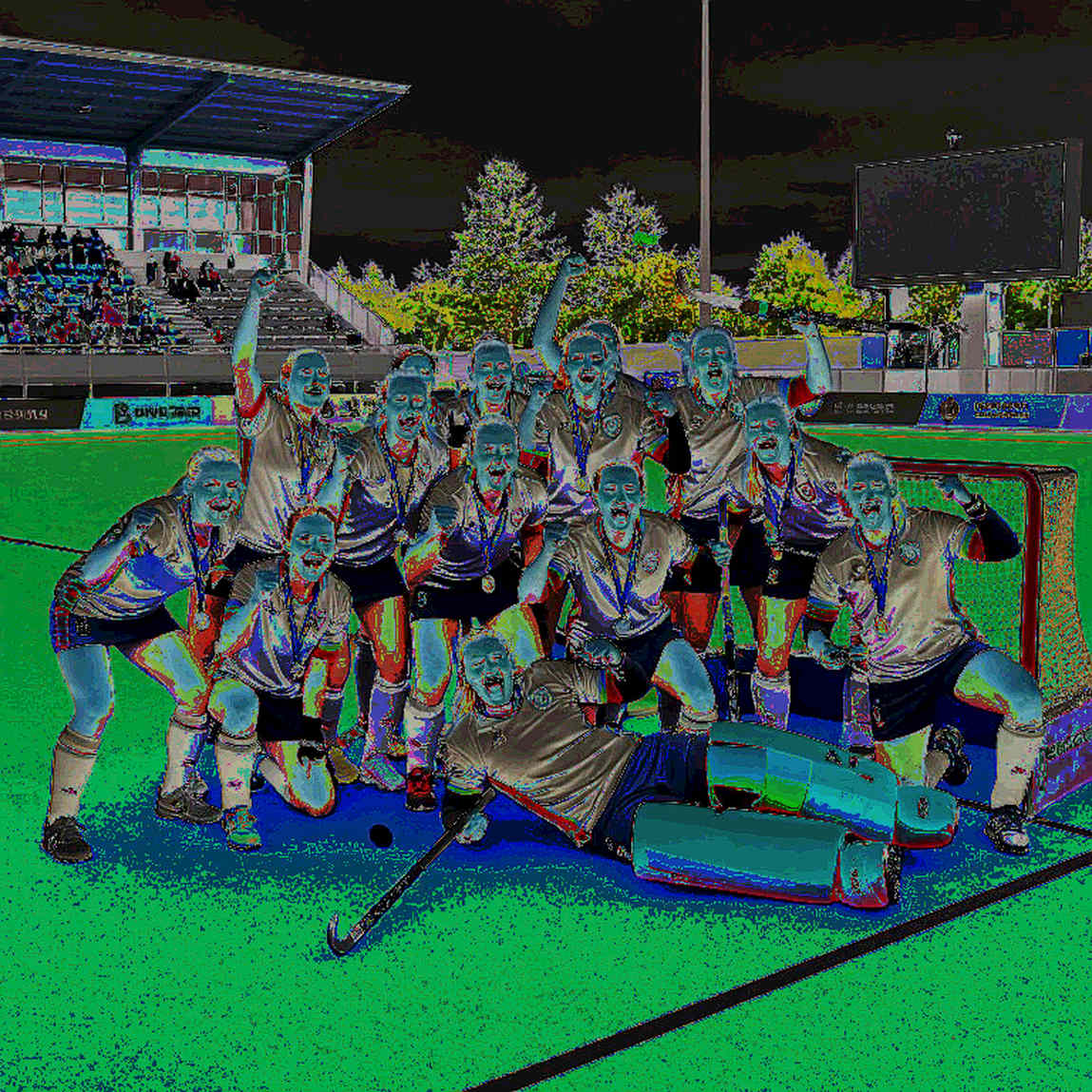
That single minute is the one I copied out onto a separate page. Because by the evening of 25 September 2026, India's tournament ledger read 59 goals — four matches, four wins, 19-0 over Uzbekistan, 17-1 over Indonesia, 20-1 over Thailand, 3-1 over Japan. Yet almost everything this tournament can tell us about the semifinal sits inside that one minute: a restart, a tomahawk, and a three-goal lead going slightly slack. The other 56 goals are silent to me.
I have been drawing shot maps by hand for nine years. I charted every shot before I trusted a single model, and I have not dropped the habit. The biggest enemy in my work is not a weak opponent; it is the temptation to treat my own notebook as a dataset. So my first act when writing about Japan was subtraction — putting the previous three results aside. They are not results. They are descriptions of circumstance. In a match where the opposing circle defence never formed, you are not measuring India's conversion rate; you are measuring how fast the other team came apart.
The hockey at the Aichi-Nagoya Asian Games 2026 is being played in Kakamigahara, and the gap visible in Pool B between India, Japan, Uzbekistan, Indonesia and Thailand is not a gap between teams. It is a gap between institutions — turf count, training continuity, whether a domestic league actually runs, how many internationals a calendar holds. Those four things are distributed so unevenly across Asian women's hockey that 19-0 and 3-1 can sit in the same event. I see that picture daily from Bangladesh, where one turf serves 170 million people. Where there is only one turf, the junior talent may exist but the senior opposition does not — and where there is no opposition, there is no such thing as a conversion rate.
Every claim in this piece stays inside the limits of one public event log and my own hand-drawn chart. I did not watch from the stands; I charted the broadcast ball by ball. Japan's goalkeeper Yu Kudo was the first keeper forced to actually make saves in this tournament. What India lacked in the first three matches — a settled defensive block and a goalkeeper who saves — they met on Friday. In informational terms, this was the only real match of the four.
By my count, India earned four penalty corners against Japan. In the seventh minute the injection reached the second castle and Navneet's hit was blocked. In the thirteenth, the stop itself failed and the ball was lost. In the thirtieth, Navneet's direct attempt was saved by Kudo, the rebound fell to Ishika, and she scored India's second. In the fiftieth Navneet came close again and again there was no goal. Four corners, one goal, zero direct drag flicks, one second-phase rebound.
Four corners for one goal is a 25 percent conversion rate. Elite women's hockey generally sits between 25 and 33 percent on penalty corners. The number is entirely ordinary. And that is exactly the point: four penalty corners cannot forecast a semifinal in either direction. My notebook does not contain the answer, and anyone claiming to hold it should be asked how they reached a conclusion from a sample of four. A hand-drawn shot map is a sample, not a dataset; blur that distinction and analysis becomes storytelling.
What is measurable is the 46th minute. Across four matches India conceded three goals, and the one that arrived in the match that mattered came in the opening minute of the fourth quarter, with a three-goal lead, on the first possession after the break. Restarts and resumptions are where concentration thins, and in my charting they are consistently the most dangerous sixty seconds of any quarter.
In the final fifteen minutes India's structure slipped twice more. Sushila's trapping error turned the ball over, Savita palmed the shot away, and from it Japan won a penalty corner — which India defended. Late on, Deepika's counterattack arrived in the right place but her reverse hit lacked the power to trouble the Japanese post. That Friday afternoon heat and humidity in Kakamigahara are not atmosphere to me; they are a fitness signal. A drop in pressing intensity in the fourth quarter and a trapping error under fatigue are not two events. They are two faces of one.
The log shows two goalkeepers. In the first period Bichu Devi stretched a leg to save a counterattack shot; in the fourth quarter Savita Punia was on the line. That may be rotation, it may be plan, but analytically it means one thing: a keeper who faced fewer shots across three matches than in a single quarter on Friday carries no form at all. Six saves from six shots and thirty-six from thirty-six are not comparable numbers. The match's only high-value save was Savita's, and it came after an Indian error — the pressure was India's own making.
Navneet Kaur deserves a paragraph of her own. In the fifth minute her hit was slowed by a Japanese stick and fell to Lalremsiami, who finished. She takes the corners. In the thirty-sixth minute she received inside the circle, moved right and scooped the ball over Kudo — probably India's finest goal of the tournament. Late in the fourth quarter Salima Tete set her up again and Kudo saved. When so much of an attacking plan sits on one stick, that is strength and fragility at once. If a semifinal coach's first job is to switch off India's primary stick, the alternative route has not been generated anywhere in these four matches.
The loudest current claim — that India are peaking — is coexistent with the 59 goals, not caused by them. The 56 goals came against sides with no circle defence. By the same logic, no opposite conclusion can be drawn either. What can be said is specific: against Japan, India's field-goal count sat in the five-to-six range, four corners produced one goal, and chance creation thinned in the final quarter.
My real contrarian finding sits elsewhere. India have not trailed for a single minute of this tournament. First goal in the fifth minute against Japan; never behind anywhere. A team that has never been behind has no data on what it does when it is. A semifinal that starts badly would be a scenario this squad has not rehearsed.
And then calibration. A soft pool is not rest; it is measurement error. There is a real benefit in blowouts — rotation, bench minutes, injury avoidance. The cost is that only one genuinely competitive sixty minutes exists before the semifinal, and this time it arrived in the last pool match. India used it well. As preparation, though, that is damage limitation, not optimisation.
Japan's 3-1 defeat may say more about Japan than about India. The hosts breached an organised defence once, won a penalty corner, stayed in the contest — against a side that beat two other teams by seventeen and nineteen. The true gap in Asian women's hockey is not between India and Japan. It is between Japan and the tier below. Nobody holds the record of exactly where that line falls.
So the Singapore match on 27 September 2026 is not a scoreline to watch. Three things are. First, whether India concede in the opening minute of any quarter — a restart-discipline test. Second, whether a penalty corner goes in directly rather than waiting for a rebound — a first-phase set-piece test. Third, whether the first-choice eleven plays sixty uninterrupted minutes together, because that sixty minutes is the real preparation, not the score.
One question follows me out. Asian hockey has preserved thousands of scorelines and almost no shot maps, no circle-entry rates, no longitudinal penalty-corner record. I sit with a hand-drawn notebook that should have been kept by five federations' data departments. Because of that absence, whether 19-0 or 3-1 carries more weight is something everyone asserts and nobody demonstrates. The notebook stays in my hands. The real question is whose hands it should have been in.