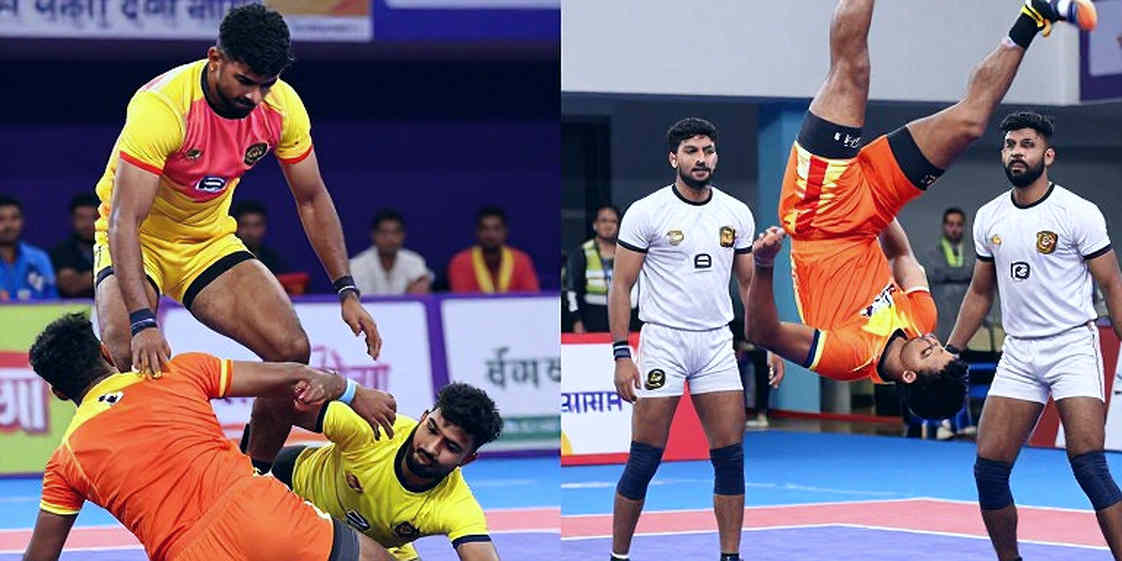
Kabaddi of Margins: One Points-Difference Column Between Bangladesh and the Semi-Finals
**সংক্ষিপ্ত উত্তর:** এশিয়ান Games ২০২৬-এর পুরুষ কাবাডির সেমিফাইনালে উঠেছে ভারত, চাইনিজ তাইপে, ইরান ও থাইল্যান্ড। গ্রুপ পর্বের শেষ দিনে চাইনিজ তাইপে, বাংলাদেশ ও জাপানের প্রত্যেকের চার ম্যাচে দুই জয় ছিল; পয়েন্ট ডিফারেন্সে চাইনিজ তাইপে এগিয়ে থেকে সেমিফাইনালে যায়, বাংলাদেশ বাদ পড়ে। সোনার ম্যাচ ২৬ সেপ্টেম্বর, ২০২৬। **মূল তথ্য:** - ভারত গ্রুপ এ-তে চার ম্যাচে চার জয় নিয়ে শীর্ষে; গ্রুপ বি-তে ইরানও চার-এ-চার। - চাইনিজ তাইপে টানা দ্বিতীয়বার, থাইল্যান্ড প্রথমবার এশিয়ান Games কাবাডিতে পদক নিশ্চিত করেছে। - পাকিস্তান প্রথমবার এশিয়ান Games কাবাডিতে পদক ছাড়া বাদ পড়েছে; দক্ষিণ কোরিয়া চার ম্যাচে চার হারে বাদ। - চতুর্থ দিনে ইরান থাইল্যান্ডকে ৮৩-২৭ ও পাকিস্তানকে ৫১-৩০ ব্যবধানে হারায়। - সেমিফাইনালের দুই হারিয়েও ব্রোঞ্জ নিশ্চিত; সোনার ম্যাচ ২৬ সেপ্টেম্বর, ২০২৬। **সূত্র:** Khel Now (এশিয়ান Games ২০২৬ পুরুষ কাবাডি গ্রুপ পর্ব প্রতিবেদন)। **সম্ভাব্য Next প্রশ্ন:** প্রশ্ন: বাংলাদেশ কেন সেমিফাইনালে উঠতে পারেনি? উত্তর: গ্রুপ এ-তে চার ম্যাচে দুই জয় নিয়ে চাইনিজ তাইপে ও জাপানের সমান পয়েন্টে থাকায় পয়েন্ট ডিফারেন্সে পিছিয়ে পড়ে বাংলাদেশ বাদ পড়ে। প্রশ্ন: সেমিফাইনালের জোড় কেমন? উত্তর: নিয়ম অনুযায়ী ভারত খেলবে থাইল্যান্ডের বিপক্ষে এবং ইরান খেলবে চাইনিজ তাইপের বিপক্ষে। প্রশ্ন: থাইল্যান্ডের প্রথম কাবাডি পদক কতটা তাৎপর্যপূর্ণ? উত্তর: এটি অ-দক্ষিণ এশীয় দেশের সিস্টেম-ভিত্তিক কাবাডি উন্নতির প্রমাণ, কারণ একই আসরে পাকিস্তান প্রথমবার পদক ছাড়াই বাদ পড়েছে।
The last match of the fourth day ended a little after half past nine. Iran were leaving the mat with a 51-30 win over Pakistan, and the scoreboard was still glowing with a single column: points difference. In Group A, below India, three teams had finished with exactly the same return—two wins in four matches. Chinese Taipei, Bangladesh, Japan. One semi-final ticket was left for three teams, and the arithmetic handed it to Chinese Taipei. Bangladesh went out by a very narrow margin.
One line of a report can erase four years of a team's preparation: the sweat soaked into a mud mat, the do-or-die raids circled in a coach's notebook. In the years I have spent sitting beside the mat, I have learned that kabaddi sometimes stops being a game on the mat and becomes a game on the points table. After the men's group stage at the Asian Games 2026, that lesson has rarely been clearer.
The day the table grew simple
Five matches on the fourth day straightened the standings. In the first match of the day, Iran ended Thailand's unbeaten run 83-27—a scoreline that looks like a typing error on first read. Hosts Japan then beat the Republic of Korea 62-35 to finish their campaign with a win. India beat Chinese Taipei 37-21, but the margin stayed small enough for Chinese Taipei to secure their semi-final place. In the evening session, Nepal finally won, beating Malaysia 73-52, while Iran beat Pakistan 51-30, ending Pakistan's hopes of a medal.
At the two ends of the table sit two familiar names. India finished top of Group A with four wins from four. Iran finished top of Group B with four wins from four. Both are the strongest gold contenders. The real story, however, is in the middle. Chinese Taipei have now secured a second consecutive kabaddi medal at the Asian Games. Thailand have won their first-ever kabaddi medal at the Games. Pakistan are going home without a kabaddi medal for the first time. And Bangladesh, where kabaddi is the national game, could not turn two wins in four matches into a semi-final place. At the bottom of Group A sit the Republic of Korea, with four defeats from four.
The pairs follow the format: Group A winners India meet Group B runners-up Thailand, while Group B winners Iran meet Group A runners-up Chinese Taipei. All four teams are already guaranteed a medal, because both beaten semi-finalists take bronze; there is no separate bronze medal match. The gold medal match is on September 26.
Thirty-seven points, and a plan called losing well
India's 37-21 will be read by many as a team pacing itself before the knockouts. That explanation is convenient. The scoreline does not describe India's performance; it describes the opponent's plan. Chinese Taipei's objective on the fourth day was not to win. It was to protect the margin. That changes the character of a match. The raider steps over the line calculating instead of attacking; the defence sits deeper; in do-or-die raids players take the bonus rather than the risk. Kabaddi produces a strange situation here: neither team really wants to win. One does not want to lose, the other does not want to spend unnecessary points.
The change shows up in the rhythm of the cant. In the final three strides of a javelin run-up, the body carries its weight slightly behind the hips; a kabaddi raider does the same thing just before touching the line—planting the mass down and reaching with the arm. When the tempo drops, that weight control stops working. The feet move, the hand trails, the touch never lands. Thirty-seven points in forty minutes is under one point a minute. In a tournament where the tempo elsewhere is high, that number suddenly says something else entirely. Which is why India's group-stage scorelines need to be read selectively: how much of those four wins was Indian strength, and how much was opposition arithmetic, is the question nobody is asking before the knockouts.
83-27 is never only 83-27
Eighty-three points in forty minutes is more than two points a minute. In kabaddi that pace arrives along a single route: touches, tackles and the ladder of all-outs. A defence thins before it collapses entirely—seven players become six, five, three. The raider's risk falls, points climb, and once a big spike begins it runs for minutes. Iran found exactly that ladder against Thailand. Thailand had been unbeaten in three matches, which means their defence had not been tested; their first real test cost them 83 points. The number is a tribute to Iran's raiding and, at the same time, evidence of how untested Thailand's defence had been.
One outside detail deserves attention. Iran played twice on the fourth day—Thailand in the first match, Pakistan in the evening. Putting the same team into a double header on the final day of the group stage, days before a semi-final, raises a scheduling question. Iran coped, and because top teams always cope, the issue will be buried. But the least discussed cost in international kabaddi is the player's body, and that cost does not appear in any federation document. What football calls workload management does not yet have a name in kabaddi.
A school called points difference
The reason three teams finished level below India in Group A needs a small sum. India won all four matches, so each of Chinese Taipei, Bangladesh and Japan took one defeat against India. Korea lost all four, so each of the three took one win against Korea. In the remaining fixtures, the three beat and lost to each other—a circle. There is only one way to break a circle: points difference.
The rule itself is not unreasonable. When three teams share identical head-to-head records, there is no other path. But what the rule measures is ugly: every idle point accumulated mid-match. When a player declines to dive for a touch in a match already won, it looks like laziness; four days later it turns out to be a semi-final ticket. Bangladesh lost that column by a very narrow margin—the difference sits in the range of one or two points. A national team's fate was settled on the scale of a referee's whistle, a bonus touch, a tackle in the final second.
I record the sounds of the mat—bare feet, breath held inside the cant, the three seconds of silence before a do-or-die raid. Those three seconds never appear on a scoresheet, yet the column in the table is built precisely out of their sum.
A national game, and an empty column
This is where Bangladesh's story becomes brutally clear, and I will say it plainly. Kabaddi is Bangladesh's national game—ha-du-du, the rural field festival, the endless supply of stories about boys who learned on a mud mat barefoot. And yet, for years, Bangladesh have been the almost team of international kabaddi: almost in the semi-finals, almost on the podium, almost by a margin.
The reason is not a shortage of talent. It is a shortage of accounting. Modern kabaddi needs points difference, raid success rate, tackle points, all-outs conceded and forced to live in a federation's daily paperwork. Chinese Taipei do this. They have no rural inheritance in kabaddi; they have an organised programme—systematic screening, fitness tracking, coaching support, and centralised preparation built around the Asian Games. That system has now delivered a second straight medal.
In Bangladesh the picture is inverted. Talent is made on the mat and then nobody tracks it. How many points are leaking per raid, which defensive combination is breaking, who is effective in the last five minutes—all of it lives in a coach's notebook and never reaches a central database. Some players get opportunities in India's league; that is their only big stage, and no equivalent has been built at home. When a semi-final place is suddenly decided by one or two points, that gap walks straight up to your face. In a game of margins, talent that is not written down becomes invisible—and that is exactly what happened to Bangladesh.
Japan, Thailand, Nepal—and the most beautiful match
Hosts Japan played a brand of kabaddi that the reports themselves praise: they may grow into a leading nation in the coming years. One thing is worth adding. Japan's rise is not a talent explosion; it is planning. Hosting the Games forced a new generation into existence, and that generation will keep playing for another eight to ten years. Thailand's first medal belongs to the same story; they won three straight before Iran broke them. And Pakistan's medal-less return is the other side of it—a former kabaddi power now living on memory, while Chinese Taipei and Thailand collect medals in the same decade. There is no clearer evidence that kabaddi's traditional geography has shifted.
Then there is Nepal against Malaysia, 73-52. The day's highest score, 125 points in one match, and neither side was going to the semi-finals; that was settled before the first raid. In August 2026 I sat in the empty Stade Louis II in Monaco and watched Joshua Cheptegei run 12:35.36 for 5,000 metres; that evening an empty stadium filled every seat. Since that night I have had a habit: the match with nothing at stake is the one worth watching most closely. The fear leaves the players, and the sport shows its real face. Nepal, already eliminated, scored 73. Malaysia scored 52. The numbers win no trophy, but they tell the truth about the ranking pyramid.
Where arithmetic will no longer help
Here is the line that stands opposite the most undeniable fact of the tournament. India are unbeaten in four, top of their group, and the biggest gold contender—and the analytical depth of that fact is close to zero. Their opponents spent two of those matches managing the table rather than playing kabaddi. When a team manages even its defeats, the winning scoreline becomes a picture of the opponent's intentions. India are so dominant at the Asian Games that their group-stage scores are now effectively written in the dark, and betting against that darkness is dangerous.
In the semi-finals, scorelines stop being hypothetical. Because all four teams are already assured of a medal, nobody will play to protect a margin once they step on the mat—there is no benefit, since a defeat ends the gold chase. So India's real question is tactical: what happens to raid filler when the tempo slows? Iran are the opposite species. They score 83 points, which means they want the game fast and want to push opponents towards do-or-die raids. If India slow the match to their own rhythm, Iran's raiding room shrinks. If Iran impose tempo, India will be forced, for the first time, to raid against the clock. For Chinese Taipei, the danger against Iran runs the other way: the semi-final offers no arithmetic lifeboat, and if the margin blows out in the first five minutes, a young side can fold.
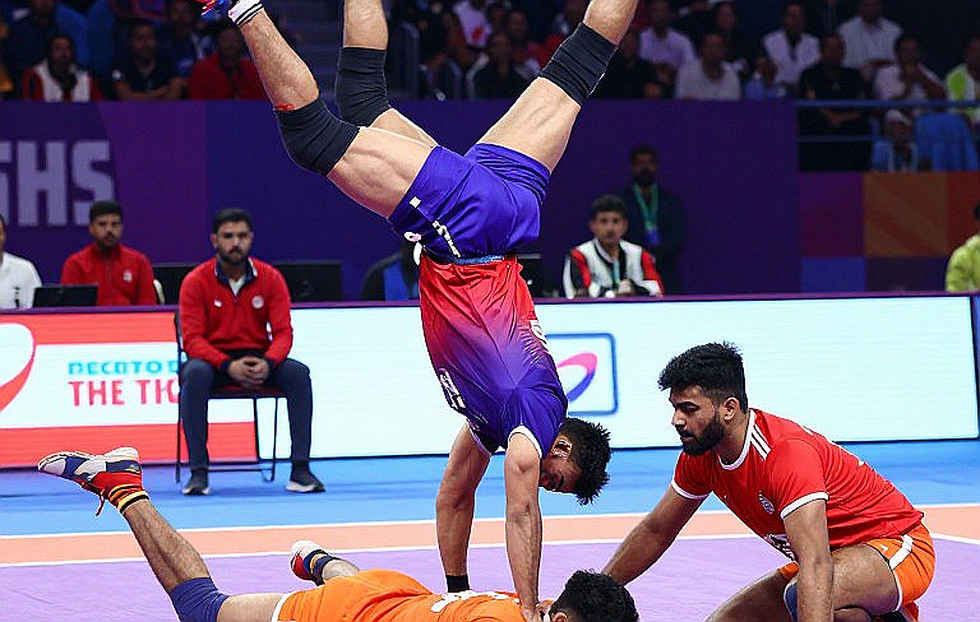
A word on the format, since this tournament showed its consequence. When third and fourth placed teams go home with two wins, the weight of that column becomes obvious. Points difference is fine as a last resort; it should not be the only instrument deciding who reaches the semi-finals at the highest level of the tournament. And one more matter belongs in the conversation about player safety—scheduling a team twice on the final day of the league stage. This is not a small tournament. It is the Asian Games. That gap deserves a name in the paperwork.
Or... where the game ends and the accounting begins
The semi-finals have no arithmetic lifeboat. Once teams step on the mat, both will want to win, because defeat leaves bronze and nothing else—a truth that reads the same in every language. The fourth day left Bangladesh with a column; and if that column does not exist in the federation's files, it will keep existing for the next four years. Points tracking, workload records, a long list of talent—those three first. Otherwise the next Games will also bring two wins and a narrower margin, and if that happens, the question will not be about kabaddi. It will be about the system.
The gold medal match is on September 26. Before that, one simple question: on the day the game is finally free of arithmetic, who is actually playing on the mat, from the first whistle to the last?